
The Clarity Imperative in Pet Education
We often hear the phrase “an ounce of prevention is worth a pound of cure,” but how often do we truly apply this wisdom to our relationships with our beloved pets? In the realm of pet ownership, this sentiment resonates deeply, perhaps even more profoundly than in many other aspects of our lives. Why? Because our pets rely entirely on us for guidance, understanding, and well-being. They can’t read instruction manuals or Google their symptoms; they depend on our ability to communicate effectively and preempt potential problems through clear, consistent education.
Think about it: a dog barking incessantly at every passing car, a cat scratching relentlessly at the furniture, a bird plucking its feathers out of anxiety. These are often not signs of inherent “badness,” but rather symptoms of miscommunication, unmet needs, or a lack of understanding on the part of both pet and owner. When we prioritize educating with clarity from the outset, we create a foundation of mutual understanding that significantly reduces the need for reactive corrections later on. We’re not just training obedience; we’re fostering a deeper connection built on trust and empathy.
But what does “educating with clarity” truly entail? It goes far beyond simply teaching commands or scolding unwanted behaviors. It requires a multifaceted approach that considers the animal’s perspective, their individual personality, and the environment in which they live. It demands patience, consistency, and a willingness to adapt our methods to suit their unique learning style.
Understanding Your Pet’s Language
One of the most significant barriers to clear communication is our tendency to anthropomorphize our pets. We project human emotions and motivations onto them, often misinterpreting their behavior and responding inappropriately. While it’s natural to feel a deep affection for our animals, it’s crucial to remember that they experience the world differently than we do.
Dogs, for instance, communicate primarily through body language. A wagging tail doesn’t always indicate happiness; it can also signify excitement, anxiety, or even aggression, depending on the context. Similarly, a cat’s purr isn’t always a sign of contentment; it can also be a self-soothing mechanism when they’re feeling stressed or unwell.
Learning to decipher these subtle cues is essential for effective communication. Observe your pet’s posture, facial expressions, and vocalizations in different situations. Pay attention to the context in which these behaviors occur. Are they interacting with other animals? Are they in a familiar or unfamiliar environment? Are they experiencing a change in routine?
By becoming fluent in your pet’s language, you can anticipate their needs, prevent misunderstandings, and respond appropriately to their emotions. This proactive approach not only strengthens your bond but also minimizes the likelihood of behavioral problems arising in the first place.

The Power of Positive Reinforcement
In the past, pet training often relied on punishment-based methods, such as scolding, leash corrections, or even physical reprimands. However, research has consistently demonstrated that these techniques are not only ineffective in the long run but can also be detrimental to the animal’s well-being. Punishment can create fear, anxiety, and aggression, damaging the bond between pet and owner and leading to a host of behavioral problems.
Positive reinforcement, on the other hand, focuses on rewarding desired behaviors. When your pet performs an action you approve of, you immediately provide a positive stimulus, such as a treat, praise, or a favorite toy. This reinforces the association between the behavior and the reward, making it more likely that they will repeat the behavior in the future.
The beauty of positive reinforcement is that it’s not only effective but also enjoyable for both pet and owner. It creates a positive learning environment, strengthens the bond between you, and encourages your pet to actively participate in the training process. Instead of fearing punishment, they become motivated to please you and earn rewards.
Beyond Treats: Finding the Right Motivator
While treats are a common and effective form of positive reinforcement, it’s important to remember that every pet is different. What motivates one animal may not work for another. Some pets are highly food-motivated, while others are more driven by praise, toys, or even physical affection.
Experiment with different types of rewards to discover what your pet finds most appealing. Does your dog go crazy for a game of fetch? Does your cat purr with delight when you scratch them behind the ears? Use these preferences to your advantage during training sessions.
It’s also important to vary the rewards you offer to keep your pet engaged. Constantly giving the same treat can lead to boredom and decrease its effectiveness. Introduce new toys, vary your tone of voice, and occasionally offer unexpected rewards to keep them on their toes.
Remember, positive reinforcement is not about bribing your pet into obedience. It’s about creating a positive association with desired behaviors, making them more likely to repeat those behaviors in the future, and fostering a stronger, more loving relationship.
Creating a Consistent and Predictable Environment
Pets thrive on routine and predictability. When their environment is consistent and predictable, they feel safe, secure, and less anxious. This, in turn, makes them more receptive to learning and less likely to develop behavioral problems.
Think about a young child who is constantly exposed to unpredictable changes in their daily routine. They might become anxious, irritable, and prone to tantrums. The same principle applies to our pets. When their lives are filled with uncertainty, they can become stressed, fearful, and more likely to exhibit unwanted behaviors.
Establishing a consistent daily routine is one of the most effective ways to create a sense of security for your pet. This includes setting regular mealtimes, providing consistent opportunities for exercise and play, and maintaining a predictable sleep schedule.
The Importance of Clear Boundaries
In addition to establishing a consistent routine, it’s also crucial to set clear boundaries for your pet. They need to understand what is acceptable behavior and what is not. This doesn’t mean being harsh or punitive, but rather setting clear expectations and consistently enforcing them.
For example, if you don’t want your dog jumping on the furniture, consistently redirect them to a designated “dog bed” or provide an alternative activity, such as a chew toy. If you don’t want your cat scratching the sofa, provide them with a scratching post and reward them when they use it.
Consistency is key when it comes to setting boundaries. If you sometimes allow your pet to engage in a behavior you don’t want them to repeat, you’re sending mixed signals and confusing them. They need to understand that the rules are the same, regardless of the situation.

Addressing Underlying Issues
Sometimes, behavioral problems are not simply the result of a lack of training or clear communication. They can also be caused by underlying medical conditions, anxiety, or other emotional issues. In these cases, it’s important to address the root cause of the problem, rather than simply trying to suppress the symptoms.
For example, a dog who is constantly chewing may be suffering from separation anxiety. A cat who is urinating outside the litter box may have a urinary tract infection. A bird who is plucking its feathers may be experiencing stress or boredom.
If you notice a sudden change in your pet’s behavior, it’s important to consult with a veterinarian or a qualified animal behaviorist. They can help you identify any underlying medical or emotional issues and develop a treatment plan that addresses the root cause of the problem.
The Role of Professional Guidance
While many pet owners are capable of training their animals themselves, there are times when professional guidance is necessary. A qualified animal behaviorist can provide valuable insights into your pet’s behavior and help you develop a customized training plan that addresses their specific needs.
They can also help you identify and address any underlying medical or emotional issues that may be contributing to the problem. Additionally, they can teach you effective communication techniques and help you build a stronger, more harmonious relationship with your pet.
Choosing a qualified animal behaviorist is crucial. Look for someone who is certified by a reputable organization, such as the Animal Behavior Society or the Certification Council for Professional Dog Trainers. Ask for references and read online reviews to get a sense of their experience and expertise.
The Long-Term Benefits of Clear Communication
Investing in clear communication and consistent education is not just about preventing behavioral problems; it’s about building a stronger, more fulfilling relationship with your pet. When you understand their needs and they understand your expectations, you create a foundation of mutual trust and respect.
This, in turn, leads to a happier, healthier, and more well-adjusted pet. They feel secure in their environment, confident in their interactions, and more likely to thrive in all aspects of their lives.
Furthermore, clear communication reduces stress for both you and your pet. When you’re not constantly battling unwanted behaviors, you can relax and enjoy each other’s company. This fosters a deeper connection and creates lasting memories that you’ll cherish for years to come.

A Lifetime of Learning
Remember that education is an ongoing process, not a one-time event. Your pet’s needs and behaviors will change over time, and it’s important to adapt your approach accordingly. Continue to observe their body language, pay attention to their cues, and be willing to learn new techniques to improve communication.
Consider enrolling in advanced training classes, attending workshops, or reading books and articles on animal behavior. The more you learn, the better equipped you’ll be to understand your pet’s needs and provide them with the best possible care.
By committing to a lifetime of learning and clear communication, you’ll not only prevent behavioral problems but also enrich the lives of both you and your beloved companion.
Case Studies: Clarity in Action
Let’s examine a few real-world examples to illustrate the power of educating with clarity. These case studies highlight how proactive communication and understanding can transform challenging situations into success stories.
**Case Study 1: The Anxious Terrier**
A family adopted a terrier mix from a local shelter. The dog, named Sparky, was initially very timid and anxious. He would cower at loud noises, bark incessantly when left alone, and was generally fearful of strangers. The family, initially frustrated, sought the advice of a certified dog trainer.
The trainer observed Sparky’s behavior and identified several factors contributing to his anxiety: a history of neglect before arriving at the shelter, a lack of consistent routine in his new home, and a tendency for the family to unintentionally reinforce his anxious behaviors by showering him with attention when he was fearful.
The trainer worked with the family to establish a consistent daily routine for Sparky, including regular mealtimes, walks, and playtime. They also taught the family how to use positive reinforcement techniques to reward calm and confident behavior.
Furthermore, the trainer helped the family create a safe and comfortable “den” for Sparky, where he could retreat when he felt overwhelmed. They also advised the family to ignore Sparky when he was exhibiting anxious behaviors, such as barking or cowering, and instead focus on rewarding him when he was calm and relaxed.
Over time, Sparky’s anxiety gradually decreased. He became more confident, less fearful, and more comfortable in his new home. The family was thrilled with the progress and grateful for the trainer’s guidance.
**Case Study 2: The Feline Furniture Destroyer**
A woman adopted a Siamese cat named Luna. Luna was a beautiful and intelligent cat, but she had a habit of scratching the furniture, much to her owner’s dismay. The woman tried everything to stop Luna from scratching the furniture, including spraying her with water, scolding her, and even declawing her (which she later regretted).
However, none of these methods worked. Luna continued to scratch the furniture, and the woman was at her wit’s end. Finally, she decided to consult with a feline behaviorist.
The behaviorist explained to the woman that scratching is a natural and essential behavior for cats. It helps them to sharpen their claws, stretch their muscles, and mark their territory. Suppressing this behavior is not only cruel but also ineffective.
The behaviorist advised the woman to provide Luna with appropriate scratching posts and to make them more appealing by placing them in strategic locations, such as near her favorite sleeping spots. She also suggested that the woman use catnip to attract Luna to the scratching posts and to reward her when she used them.
Within a few weeks, Luna had completely stopped scratching the furniture and was happily using her scratching posts instead. The woman was relieved and grateful for the behaviorist’s advice.
These case studies demonstrate that with clear communication, consistent education, and a willingness to understand your pet’s needs, you can overcome even the most challenging behavioral problems. It’s about empathy, patience, and a commitment to building a strong and lasting bond with your animal companion.
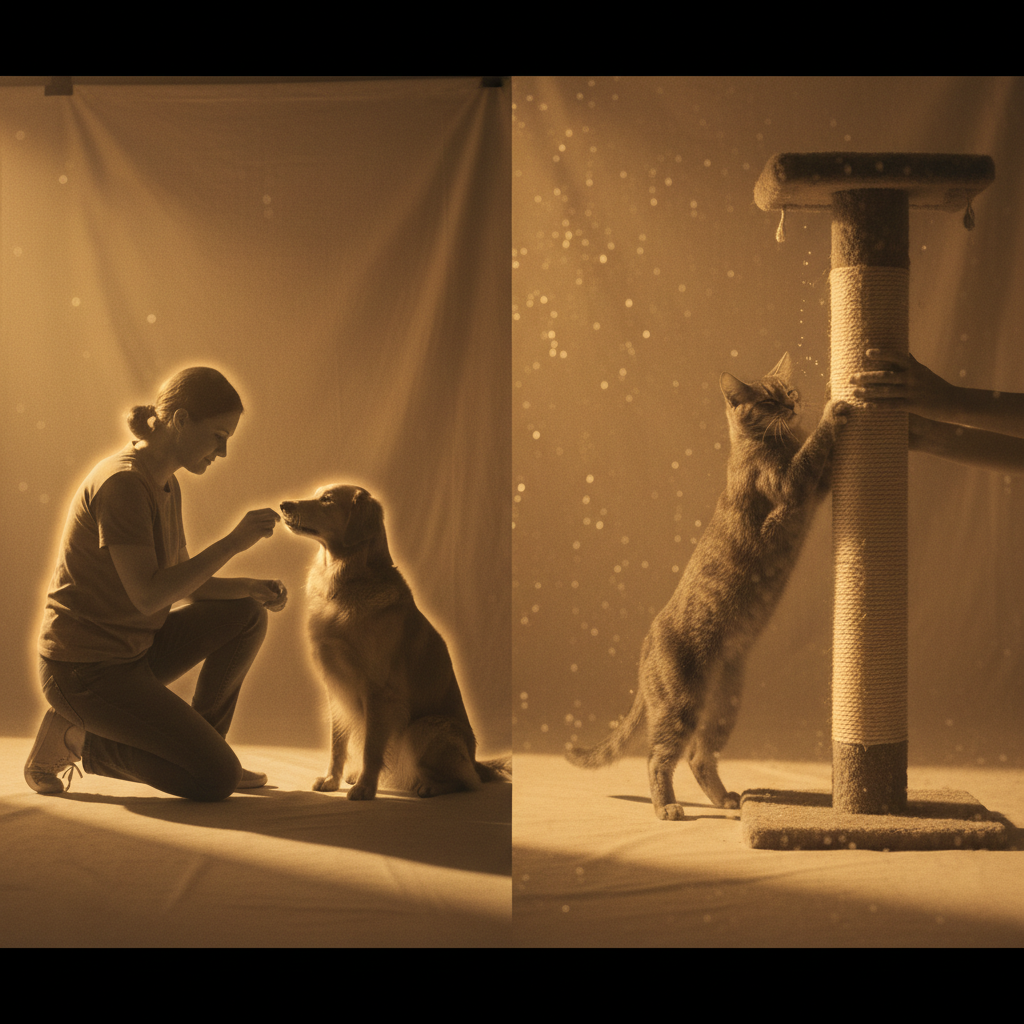
Ultimately, educating with clarity is an investment in your pet’s well-being and your own happiness. It’s about understanding their language, creating a consistent environment, addressing underlying issues, and seeking professional guidance when needed. By prioritizing clear communication and consistent education, you can create a relationship built on trust, respect, and unconditional love. This leads to a more harmonious and fulfilling life for both you and your cherished animal companion.

Hi, my name is Robert Max, I live in the United States and I’m the creator of InTechNews. I started this blog with the goal of sharing reliable and practical information about pet care, helping pet owners provide a healthier and happier life for their animals. I’m passionate about animal well-being and believe that good information makes all the difference in responsible pet ownership.