
The Great Pet Toy Paradox
Have you ever walked into a pet store, overwhelmed by the sheer volume of toys promising endless fun for your furry friend? Balls, plushies, ropes, puzzles – the options seem limitless. We, as loving pet owners, often find ourselves drawn to these brightly colored, cleverly designed products, envisioning hours of happy play for our companions. But have you ever stopped to consider whether all those toys are truly beneficial, or if we’re simply contributing to a cycle of consumerism that ultimately doesn’t serve our pets’ best interests?
The truth is, the pet toy industry is a booming business, fueled by our desire to provide the best for our beloved animals. But sometimes, that desire can lead us astray. We buy toys impulsively, often based on what looks appealing to *us*, rather than considering what our pets actually need or enjoy. This can lead to overflowing toy boxes, filled with items that are either ignored, quickly destroyed, or, in some cases, even pose a safety hazard.
So, before you reach for that next squeaky toy or plush animal, let’s delve into the world of pet toys, separating the truly valuable from the potentially harmful. We’ll explore the types of toys that are most beneficial for different animals, how to choose safe and durable options, and how to create a stimulating and enriching play environment without necessarily breaking the bank. Are we buying toys for our pets, or are we buying them for ourselves? It’s a question worth pondering.
The Psychology of Play: Understanding Your Pet’s Needs
Play is fundamental to the well-being of most animals. It’s not just about fun and games; it’s crucial for their physical and mental health. Play allows animals to practice essential skills, such as hunting, problem-solving, and social interaction. For example, a cat batting at a toy mouse is essentially honing its hunting instincts, while dogs engaging in a game of tug-of-war are reinforcing their social bonds and exercising their muscles.
However, not all toys are created equal. What appeals to one animal might be completely uninteresting to another. Understanding your pet’s individual needs and preferences is key to selecting toys that will truly enrich their lives. Consider their breed, age, energy level, and personality. A high-energy Border Collie, for instance, will likely benefit from toys that provide a mental challenge and physical outlet, such as puzzle toys or a frisbee. A senior cat, on the other hand, might prefer a soft, plush toy to snuggle with or a gentle laser pointer game.
Observe your pet’s play style. Do they enjoy chasing, chewing, or problem-solving? Are they easily bored or do they have a long attention span? Pay attention to the types of toys they gravitate towards and the ways they interact with them. This will give you valuable insights into their preferences and help you make more informed decisions when choosing new toys. And remember, variety is the spice of life. Just like humans, pets can get bored with the same old routine. Rotate their toys regularly to keep things fresh and exciting.
Safety First: Avoiding Potential Hazards
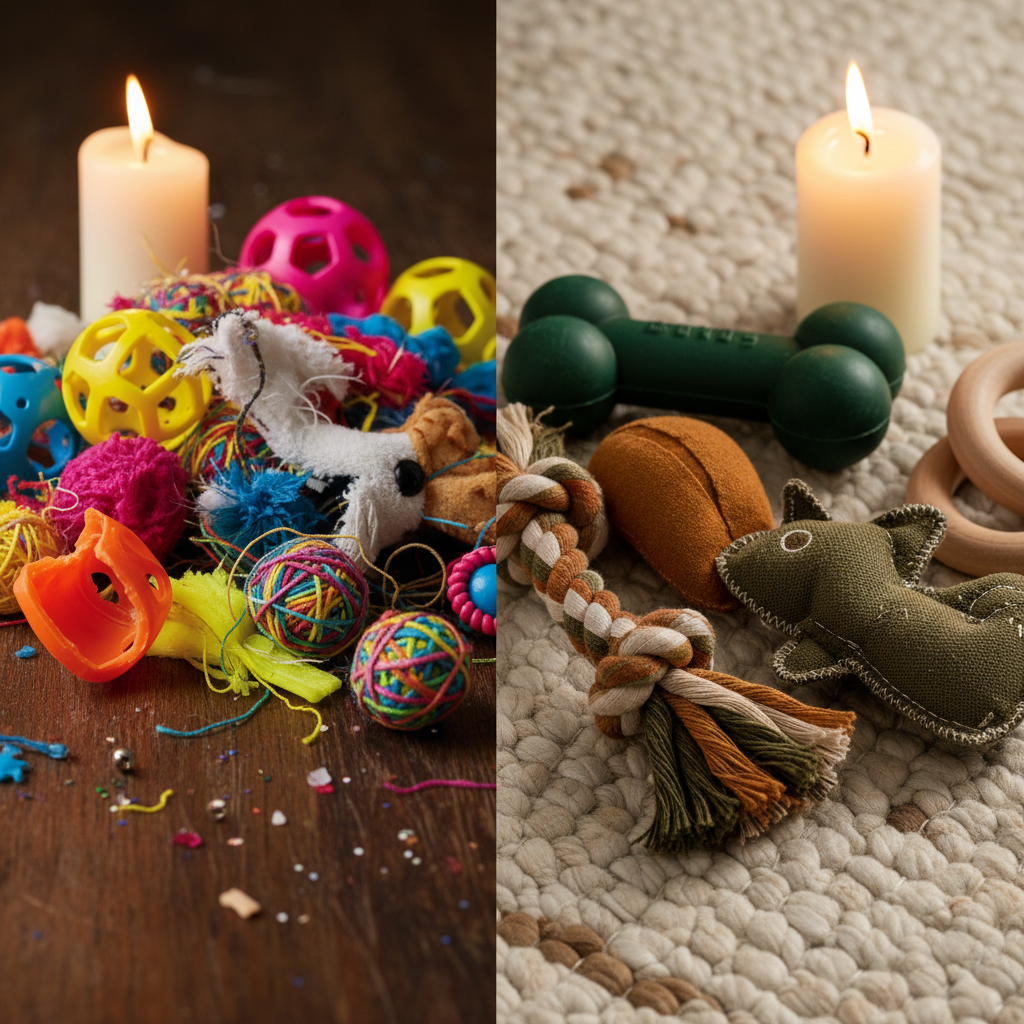
While play is essential, safety should always be your top priority when choosing toys for your pet. Many toys on the market contain materials that can be harmful if ingested, or present a choking hazard if they break apart. It’s crucial to be vigilant and inspect toys regularly for signs of wear and tear.
One of the biggest dangers is small parts that can be easily swallowed, such as buttons, ribbons, or plastic eyes. These can cause intestinal blockages, which can be life-threatening. Choose toys that are durable and well-constructed, and avoid those with small, detachable pieces. For dogs that are aggressive chewers, opt for toys made from tough, non-toxic materials like heavy-duty rubber or reinforced nylon.
Another common hazard is toxic materials. Many cheaply made toys are manufactured with harmful chemicals, such as lead, BPA, and phthalates. These chemicals can leach out of the toy and be ingested by your pet, leading to a range of health problems. Look for toys that are labeled as “BPA-free,” “lead-free,” and “non-toxic.” Research reputable brands that prioritize safety and use high-quality materials.
Rope toys, while popular among dogs, can also pose a risk. When chewed, the fibers can unravel and be swallowed, leading to intestinal blockages. Monitor your dog closely while they are playing with rope toys and discard them as soon as they start to fray.
Finally, be mindful of the size of the toy. Toys that are too small can be easily swallowed, while toys that are too large can be difficult for your pet to handle. Choose toys that are appropriately sized for your pet’s breed and size.
The Importance of Regular Inspection
Even the safest toys can become hazardous over time due to wear and tear. Make it a habit to inspect your pet’s toys regularly for any signs of damage, such as cracks, tears, or loose parts. Discard any toys that are damaged or pose a potential hazard. It’s better to be safe than sorry.
Beyond the Store: Creative and Cost-Effective Alternatives
Providing a stimulating and enriching play environment for your pet doesn’t necessarily require a constant stream of new toys. In fact, some of the best toys are those that you can make yourself or repurpose from household items.
Consider creating a puzzle toy by hiding treats inside an empty cardboard box or toilet paper roll. This will challenge your pet’s problem-solving skills and keep them entertained for hours. You can also make a simple tug-of-war toy by braiding together strips of old t-shirts or towels.
For cats, a crumpled ball of paper or an empty cardboard box can provide endless entertainment. You can also create a scratching post by wrapping a piece of wood with sisal rope.
The key is to be creative and resourceful. Look around your home for items that can be safely repurposed into toys. Just be sure to supervise your pet closely to ensure they don’t ingest any harmful materials.
Another great option is to engage in interactive play with your pet. Games like fetch, tug-of-war, and hide-and-seek are not only fun for your pet, but also strengthen your bond and provide valuable exercise. Dedicate a few minutes each day to playing with your pet and you’ll be surprised at how much it improves their well-being.
Rotating Toys: Keeping Things Fresh
Even the most engaging toys can lose their appeal over time. To keep your pet interested and stimulated, rotate their toys regularly. Put away some toys and bring out others that they haven’t seen in a while. This will create a sense of novelty and excitement, and prevent your pet from getting bored.
You can also introduce new toys gradually, one at a time. This will allow your pet to explore each toy fully and appreciate its unique features.
Matching the Toy to the Pet: A Species-Specific Guide
What works wonders for a dog might be utterly useless for a cat, and vice-versa. Understanding the specific needs and instincts of your pet species is paramount to choosing the right toys.
For the Canine Companion
Dogs, with their boundless energy and playful spirits, thrive on interaction and mental stimulation. Toys that cater to their natural instincts, such as chasing, retrieving, and chewing, are generally a good bet.
* **Chew Toys:** Indispensable for puppies and dogs with strong chewing tendencies. Opt for durable materials like rubber or nylon, and avoid toys that can be easily broken into small pieces.
* **Fetch Toys:** Balls, frisbees, and dummies are classics for a reason. They provide excellent exercise and satisfy a dog’s natural retrieving instincts.
* **Puzzle Toys:** These toys challenge a dog’s problem-solving skills and keep them mentally engaged. Look for toys that require your dog to figure out how to access hidden treats.
* **Tug-of-War Toys:** A great way to bond with your dog and provide a physical outlet. Choose a durable rope or tug toy that is comfortable for both of you to hold.

For the Feline Friend
Cats, with their independent nature and hunting instincts, require toys that stimulate their minds and bodies in a different way. Toys that mimic prey, encourage pouncing, and provide a sense of accomplishment are often successful.
* **Wand Toys:** These toys, consisting of a wand with feathers, ribbons, or other enticing objects attached, are irresistible to most cats. They allow you to mimic the movements of prey and encourage your cat to pounce and chase.
* **Laser Pointers:** A classic cat toy that provides endless entertainment. However, be sure to end the play session with a tangible reward, such as a treat or a physical toy, to satisfy your cat’s hunting instincts.
* **Catnip Toys:** Catnip is a natural herb that has a stimulating effect on many cats. Catnip toys can provide hours of entertainment and encourage playfulness.
* **Puzzle Toys:** Cats also enjoy puzzle toys that challenge their problem-solving skills. Look for toys that require your cat to manipulate objects or access hidden treats.
For Small Animals: Rabbits, Hamsters, and Guinea Pigs
These smaller companions also require enrichment to keep them happy and healthy. Their toys often focus on chewing, exploring, and hiding.
* **Chew Toys:** Essential for rabbits, guinea pigs, and hamsters to keep their teeth trimmed and prevent dental problems. Choose toys made from natural wood, cardboard, or untreated willow.
* **Tunnels and Hideaways:** Small animals love to explore and hide in tunnels and hideaways. These provide a sense of security and encourage natural behaviors.
* **Foraging Toys:** These toys encourage small animals to search for food, mimicking their natural foraging behavior. You can hide treats inside a hay-filled ball or scatter food around their enclosure.
* **Exercise Wheels:** For hamsters and mice, an exercise wheel is a must-have. It provides a way for them to burn off energy and stay physically fit.
The Environmental Impact: Choosing Sustainable Options
As responsible pet owners, it’s important to consider the environmental impact of the toys we buy. Many pet toys are made from plastic, which is a non-renewable resource that can take hundreds of years to decompose.
Fortunately, there are a growing number of sustainable and eco-friendly pet toy options available. Look for toys made from recycled materials, such as recycled plastic bottles or recycled cotton. You can also choose toys made from natural materials, such as bamboo, hemp, or organic cotton.
By making conscious choices about the toys we buy, we can reduce our environmental footprint and support companies that are committed to sustainability.
Supporting Ethical Brands
Do your research and support companies that prioritize ethical labor practices and environmental responsibility. Look for brands that are transparent about their manufacturing processes and use sustainable materials.
The Ultimate Guide: Questions to Ask Before You Buy
Before you succumb to the allure of the next pet toy, pause and ask yourself these crucial questions:
1. **Is it safe?** Prioritize safety above all else. Check for small parts, toxic materials, and potential choking hazards.
2. **Is it durable?** Choose toys that are well-constructed and made from durable materials that can withstand your pet’s play style.
3. **Is it appropriate for my pet’s species, breed, age, and personality?** Consider your pet’s individual needs and preferences.
4. **Will it provide mental and physical stimulation?** Choose toys that challenge your pet and encourage them to engage in natural behaviors.
5. **Is it environmentally friendly?** Opt for toys made from recycled or natural materials.
6. **Do I really need it?** Be honest with yourself. Are you buying this toy because your pet needs it, or because you want it?
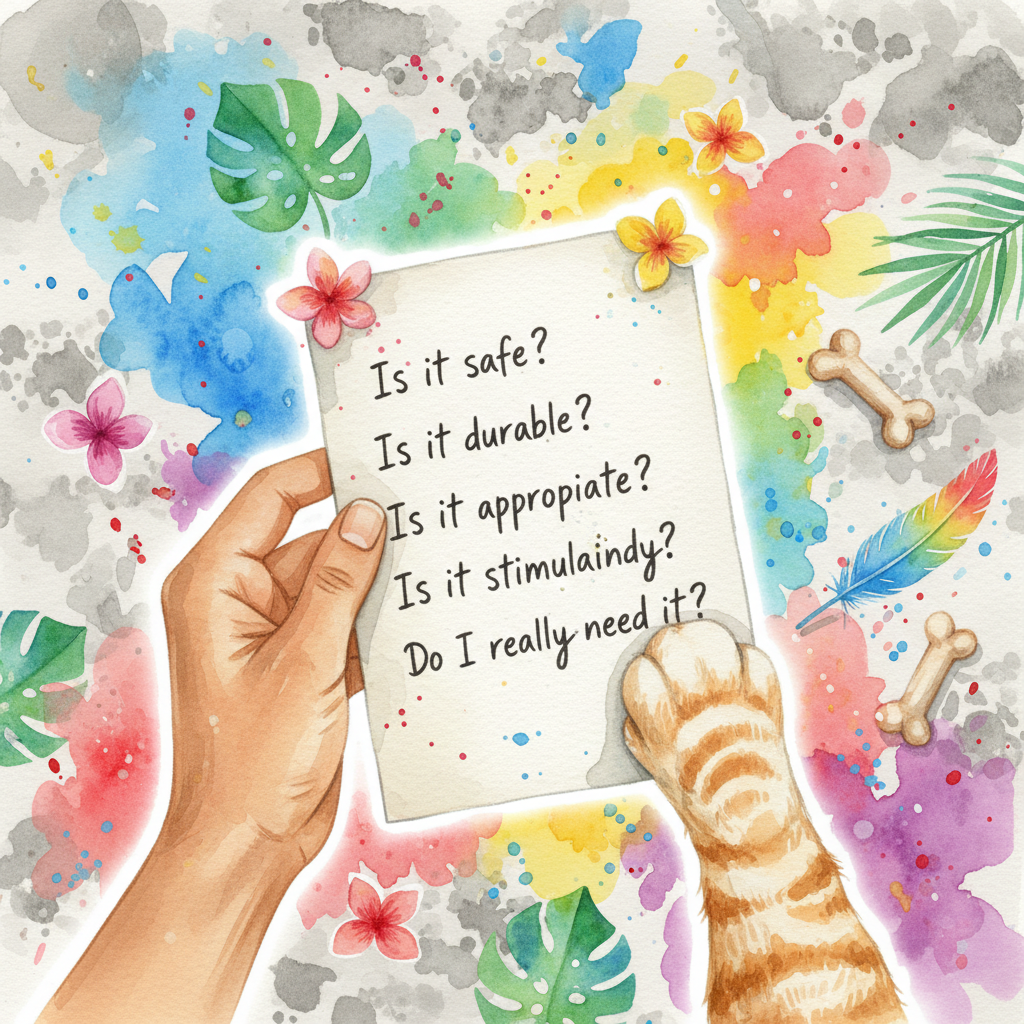
By asking yourself these questions, you can make more informed decisions about the toys you buy for your pet. You’ll be less likely to waste money on toys that your pet won’t use, and you’ll be more likely to find toys that will truly enrich their lives.
Beyond Toys: Creating a Stimulating Environment
Remember, toys are just one piece of the puzzle. Creating a stimulating and enriching environment for your pet involves more than just providing them with a variety of playthings.
Consider your pet’s living space. Is it cluttered and boring, or is it filled with opportunities for exploration and discovery? Provide your pet with plenty of opportunities to climb, scratch, and explore. Offer them a variety of surfaces to walk on, such as carpet, wood, and tile. Create hiding places where they can feel safe and secure.
Also, think about your pet’s social needs. Do they have opportunities to interact with other animals and people? Socialization is crucial for the well-being of many pets. If you have a dog, consider taking them to dog parks or enrolling them in obedience classes. If you have a cat, provide them with plenty of attention and playtime.
The Power of Routine
A consistent routine can also contribute to your pet’s well-being. Establish a regular feeding schedule, exercise routine, and playtime. This will help your pet feel secure and predictable, which can reduce stress and anxiety.
The Final Verdict: Quality Over Quantity
When it comes to pet toys, quality is always more important than quantity. A few well-chosen, durable, and engaging toys are far more valuable than a mountain of cheap, flimsy toys that will quickly end up in the trash.
Invest in toys that are safe, durable, and appropriate for your pet’s individual needs. Rotate their toys regularly to keep things fresh and exciting. And remember, the best toy of all is your attention and affection. Spend quality time playing with your pet, and you’ll strengthen your bond and enrich their lives in ways that no toy ever could.

Ultimately, the goal is to create a happy and healthy life for your beloved companion. By being mindful of the toys we choose, the environment we create, and the time we dedicate to our pets, we can ensure that they live fulfilling and enriching lives. The focus should always be on providing enrichment and stimulation in a safe and responsible manner, prioritizing our pet’s well-being over fleeting trends and impulsive purchases. Let’s be conscious consumers and loving pet parents, always striving to provide the best possible life for our furry, scaled, or feathered friends.

Hi, my name is Robert Max, I live in the United States and I’m the creator of InTechNews. I started this blog with the goal of sharing reliable and practical information about pet care, helping pet owners provide a healthier and happier life for their animals. I’m passionate about animal well-being and believe that good information makes all the difference in responsible pet ownership.