
The Allure of the Toy Aisle: More Than Just Fun and Games
Stepping into the pet store’s toy aisle can feel like entering a wonderland – a kaleidoscope of colors, shapes, and materials promising endless entertainment for your furry friend. But beyond the initial visual appeal, lies a crucial distinction: are these toys merely distractions, or do they offer genuine stimulation that contributes to your pet’s well-being?
We, as responsible pet owners, often fall prey to the allure of the newest, shiniest toy, hoping it will magically solve boredom or behavioral issues. We load up our carts, envisioning hours of blissful playtime. However, the reality can often be quite different. A toy that initially captivates can quickly lose its appeal, ending up forgotten in a corner, while your pet reverts to destructive behaviors or displays signs of apathy. The key lies in understanding what truly constitutes “stimulation” and how to differentiate it from simple, fleeting distraction.
Defining Stimulation: Beyond the Surface
Stimulation, in the context of pet toys, goes far beyond merely occupying your pet’s time. It involves engaging their natural instincts, challenging their cognitive abilities, and promoting physical activity in a meaningful way. A truly stimulating toy caters to your pet’s specific needs and preferences, considering their breed, age, personality, and energy levels.
Think about it: a herding breed like a Border Collie thrives on tasks and challenges that mimic their natural herding instincts. A plush, squeaky toy might provide momentary amusement, but it won’t satisfy their deep-seated need for mental and physical exertion. Similarly, a scent-driven breed like a Beagle will be far more captivated by a puzzle toy filled with enticing treats than a simple chew toy. Understanding these inherent predispositions is crucial in selecting toys that truly resonate with your pet and provide lasting stimulation.
Consider the difference between a simple laser pointer and a puzzle feeder for a cat. The laser pointer provides instant gratification, triggering the cat’s prey drive with a fleeting, unattainable target. While initially entertaining, it can lead to frustration and anxiety, as the cat is never able to “catch” its prey. In contrast, a puzzle feeder requires the cat to use its problem-solving skills to access the food inside, providing mental stimulation and a sense of accomplishment. Which toy is truly enriching?
Ultimately, a stimulating toy should encourage your pet to think, learn, and explore, contributing to their overall mental and physical health. It’s about providing opportunities for them to express their natural behaviors in a safe and constructive manner.
The Pitfalls of Distraction: Empty Entertainment
Distraction, on the other hand, is a temporary fix. It might keep your pet occupied for a short period, but it doesn’t address their underlying needs or contribute to their long-term well-being. Many toys fall into this category, offering immediate gratification without any real substance.
Think of the brightly colored, mass-produced toys that flood the market. Often made with cheap materials and lacking any real purpose beyond visual appeal, these toys quickly lose their luster. A dog might enthusiastically chew on a squeaky plastic toy for a few minutes, only to lose interest once the novelty wears off. The toy has served its purpose as a temporary distraction, but it hasn’t provided any lasting benefit.
Moreover, relying solely on distracting toys can actually be detrimental to your pet’s development. It can lead to boredom, frustration, and the development of undesirable behaviors like excessive barking, chewing, or digging. When a pet’s needs for mental and physical stimulation are not met, they will often find their own ways to occupy themselves, which may not be to your liking. Are you truly addressing the problem, or just putting a band-aid on it?
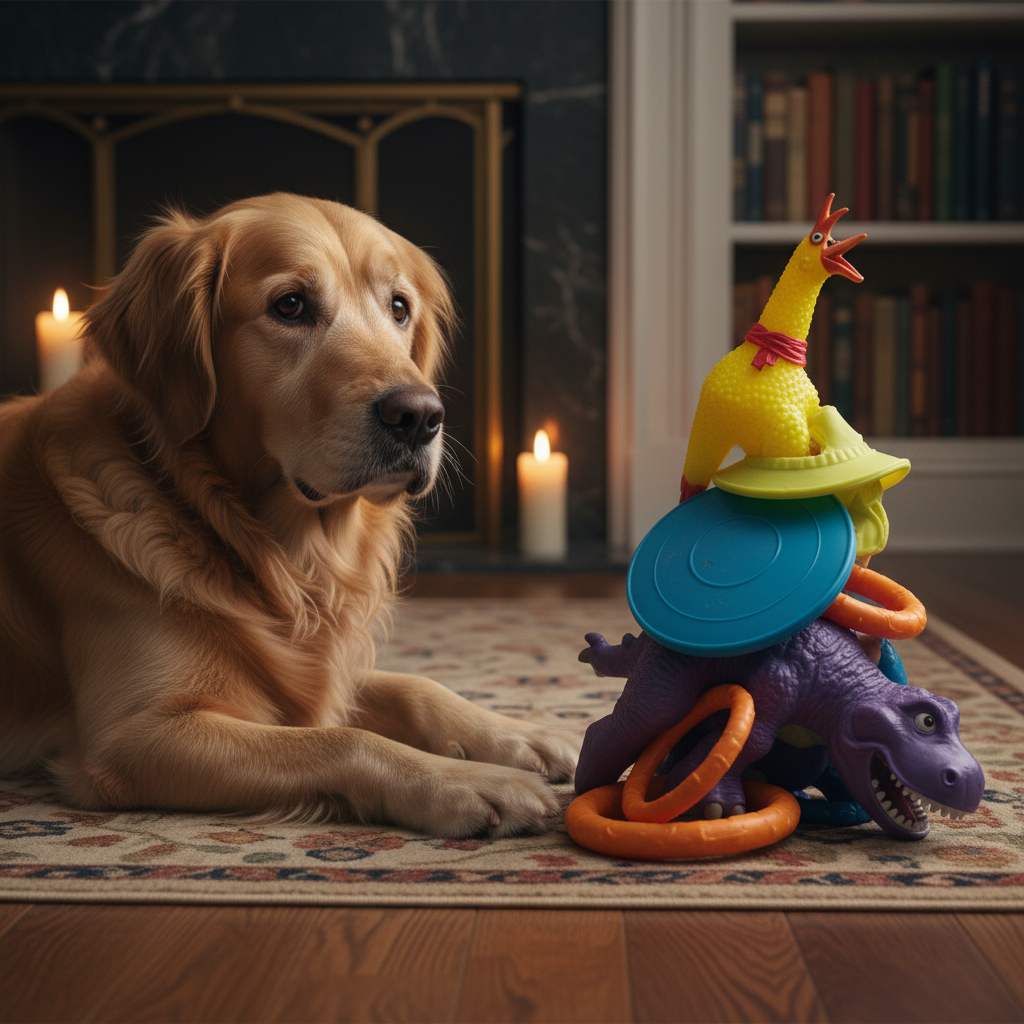
Recognizing the Signs: Is Your Pet Truly Engaged?
How can you tell if a toy is truly stimulating or merely a distraction? Pay close attention to your pet’s behavior while they’re playing. Are they genuinely engaged and focused, or are they simply going through the motions? Do they seem to be enjoying themselves, or are they showing signs of frustration or boredom?
A truly stimulating toy will hold your pet’s attention for an extended period, without requiring constant intervention from you. They will be actively exploring the toy, using their problem-solving skills to figure it out, and showing signs of satisfaction when they succeed. In contrast, a distracting toy will quickly lose its appeal, and your pet will likely move on to something else within a few minutes.
Consider a scenario: you give your dog a Kong filled with peanut butter. A stimulating experience would involve your dog diligently working to extract the peanut butter, licking, pawing, and chewing at the Kong with focused determination. They might spend a significant amount of time on this task, showing signs of satisfaction and contentment. A distracting experience, on the other hand, might involve your dog licking at the Kong for a few seconds before giving up in frustration, leaving the Kong untouched and seeking out other forms of entertainment.
Ultimately, the best way to determine if a toy is truly stimulating is to observe your pet’s behavior and assess their overall well-being. Are they happier, more relaxed, and less prone to destructive behaviors when they have access to stimulating toys? If so, then you’re on the right track.
The Power of Interactive Play: Strengthening the Bond
While individual toys can provide stimulation, the most enriching experiences often involve interactive play with you, their human companion. Interactive play not only provides mental and physical stimulation but also strengthens the bond between you and your pet.
Think of a game of fetch with a frisbee. This activity involves physical exertion, coordination, and communication between you and your dog. Your dog gets to run, jump, and catch, while you get to provide encouragement and praise. The shared experience creates a sense of connection and strengthens the bond between you. Or consider a training session where you teach your dog a new trick. This requires focus, patience, and communication from both parties, resulting in a sense of accomplishment and a deeper understanding of each other.
Interactive play can take many forms, from simple games like tug-of-war to more complex activities like agility training. The key is to find activities that both you and your pet enjoy and that provide a healthy balance of mental and physical stimulation. Remember, the goal is to create a positive and engaging experience that strengthens your relationship and enhances your pet’s well-being.
Never underestimate the power of simply talking to your pet while you play. Verbal communication, even if they don’t understand the specific words, can be incredibly reassuring and stimulating for them. The sound of your voice, the tone of your words, and the attention you’re giving them can all contribute to a more enriching and fulfilling experience.

Beyond Toys: Enriching Your Pet’s Environment
Stimulation doesn’t have to come solely from toys. Enriching your pet’s environment can also provide valuable opportunities for mental and physical engagement. Consider the physical space that your pet occupies most of the day. Is it stimulating, inviting, and safe?
Think about adding elements that cater to their natural instincts. For cats, this might include scratching posts, climbing structures, and window perches that allow them to observe the outside world. For dogs, this might include digging boxes, puzzle feeders, and access to a variety of textures and smells. Even simple changes, like rotating your pet’s toys regularly or providing them with new and interesting objects to explore, can make a big difference.
For example, a cat tree isn’t just furniture; it’s a multi-sensory experience. It provides a safe space to climb and survey their territory, satisfying their natural instinct to be high up. The scratching post caters to their need to groom their claws and mark their territory, preventing them from scratching furniture. The different textures and materials provide tactile stimulation, while the various levels offer opportunities for exploration and play.
Outdoor access, whether it’s a fenced-in yard or a daily walk, is also crucial for many pets. The sights, sounds, and smells of the outside world provide a constant stream of stimulation, engaging their senses and preventing boredom. A simple walk in the park can be a far more enriching experience than hours spent indoors with a pile of uninspiring toys.
Tailoring Toys to Your Pet’s Personality and Needs
The most effective approach to toy selection involves considering your pet’s unique personality, breed, age, and energy levels. What works for one pet may not work for another. Understanding your pet’s individual needs is crucial in finding toys that truly resonate with them.
An elderly dog with arthritis, for example, will likely benefit more from a soft, plush toy that they can cuddle with than a high-energy ball that requires a lot of running and jumping. A highly intelligent breed like a Poodle will thrive on puzzle toys and training sessions that challenge their cognitive abilities. A timid cat might prefer a quiet, enclosed space where they can retreat and feel safe. A playful kitten will appreciate toys they can chase and pounce on, simulating hunting behavior.
Consider your pet’s chewing habits. Some pets are gentle chewers, while others are aggressive destroyers. Choosing toys that are durable and appropriate for your pet’s chewing style is essential for safety and longevity. Avoid toys with small parts that can be easily swallowed, and always supervise your pet during playtime to prevent accidents.
Don’t be afraid to experiment with different types of toys to see what your pet enjoys most. Observe their behavior and pay attention to their preferences. What toys do they gravitate towards? What activities seem to engage them the most? Use this information to guide your future toy purchases and create a stimulating and enriching environment for your furry friend.

The Ever-Evolving Toy Box: Keeping Things Fresh
Even the most stimulating toy can lose its appeal over time. To keep your pet engaged and prevent boredom, it’s important to rotate their toys regularly and introduce new ones periodically. Think of it as curating an ever-evolving toy box that offers a variety of experiences and challenges.
Consider storing some of your pet’s toys out of sight and bringing them out periodically. This will make them seem new and exciting again. You can also introduce new toys that offer different textures, shapes, and challenges. A puzzle toy that requires your pet to solve a new problem, or a chew toy that offers a different texture or flavor, can reignite their interest and provide a fresh source of stimulation.
You can also repurpose everyday objects as toys, as long as they are safe and non-toxic. An empty cardboard box can provide hours of entertainment for a cat, while a stuffed sock can be a fun and engaging toy for a dog. Be creative and think outside the box. The possibilities are endless.
Rotating toys is not just about preventing boredom; it’s also about providing new learning opportunities. Each new toy presents a different set of challenges and requires your pet to use their problem-solving skills in new ways. This helps to keep their minds sharp and engaged, contributing to their overall cognitive health.
Investing in Well-being: Beyond the Price Tag
While price can be a factor in toy selection, it’s important to remember that the most expensive toy is not necessarily the best. Focus on quality, durability, and the potential for stimulation, rather than simply opting for the flashiest or most expensive option.
A simple, well-made toy that engages your pet’s natural instincts can be far more beneficial than a complex, expensive toy that quickly loses its appeal. Consider investing in toys that are designed to last and that offer a variety of play options. A durable chew toy, for example, can provide hours of entertainment and help to keep your pet’s teeth clean. A puzzle toy can challenge their cognitive abilities and prevent boredom. A soft, plush toy can provide comfort and security.
Ultimately, the best toys are those that contribute to your pet’s overall well-being, promoting their mental and physical health, and strengthening the bond between you. Investing in these types of toys is an investment in your pet’s happiness and quality of life. It’s about providing them with opportunities to express their natural behaviors, challenge their minds, and engage their senses.

In conclusion, the difference between toys that distract and toys that truly stimulate lies in their ability to engage a pet’s natural instincts, challenge their cognitive abilities, and promote physical activity in a meaningful way. By understanding your pet’s individual needs and preferences, choosing toys that are durable and safe, and prioritizing interactive play and environmental enrichment, you can create a stimulating and fulfilling life for your furry friend. Remember, it’s not just about keeping them busy; it’s about enriching their lives and strengthening the bond you share.

Hi, my name is Robert Max, I live in the United States and I’m the creator of InTechNews. I started this blog with the goal of sharing reliable and practical information about pet care, helping pet owners provide a healthier and happier life for their animals. I’m passionate about animal well-being and believe that good information makes all the difference in responsible pet ownership.