
The Illusion of Control: Obedience vs. Connection
We’ve all seen it, that perfectly poised dog performing a flawless “sit” or “stay” on command. Applause erupts, the owner beams with pride, and the dog, well, the dog sits there, perhaps a little bewildered, perhaps just waiting for the next instruction. But what’s really going on beneath the surface of that seemingly perfect obedience? Are we truly connecting with our canine companions, or are we simply creating fragile automatons, programmed to respond to commands without genuine understanding or engagement?
The truth is, traditional dog training often prioritizes obedience above all else. We focus on teaching commands, reinforcing desired behaviors with treats and praise, and correcting unwanted behaviors with leash pressure or verbal reprimands. While these methods can be effective in achieving short-term results, they often fail to address the underlying emotional and psychological needs of the dog. We end up with a dog that obeys, but not necessarily a dog that connects.
Think of it like learning a language. You can memorize vocabulary and grammar rules, and even parrot phrases perfectly. But if you don’t understand the nuances of the culture, the subtle inflections of the voice, the unspoken cues, you’re not truly communicating. You’re just performing. Similarly, a dog that’s been trained solely through rote memorization of commands may execute those commands flawlessly, but it may not truly understand what we’re asking of it, or why. It’s a performance, not a connection.
The Fragility of Force
Reliance on purely obedience-based training often leads to a fragile form of control. The dog learns to comply out of fear of punishment or desire for reward, rather than out of a genuine understanding of what we want. This creates a situation where the dog’s behavior is highly dependent on the presence of the owner and the constant reinforcement of commands. Remove those elements, and the behavior crumbles.
Consider the dog that performs perfectly in training sessions but completely ignores commands in a distracting environment. Or the dog that obeys flawlessly at home but becomes reactive and aggressive on walks. These are classic examples of fragile obedience. The dog has learned to associate certain commands with specific rewards or punishments, but it hasn’t developed the ability to generalize those commands to different situations or to exercise self-control in the absence of direct supervision.
Furthermore, training methods that rely heavily on force or coercion can damage the bond between dog and owner. The dog may become fearful, anxious, or resentful, leading to a breakdown in trust and communication. In extreme cases, it can even trigger aggression. Is a perfectly obedient dog worth sacrificing the deep, loving connection that we crave with our canine companions?

Beyond Obedience: Building a Foundation of Trust and Understanding
So, what’s the alternative? How do we train our dogs in a way that fosters genuine connection and understanding, rather than just creating fragile obedience? The answer lies in shifting our focus from simply teaching commands to building a strong foundation of trust, communication, and mutual respect.
This approach emphasizes positive reinforcement, clear communication, and understanding the dog’s perspective. It involves teaching the dog what we want, rather than simply punishing it for what we don’t want. It means taking the time to understand the dog’s individual needs, motivations, and learning style, and tailoring our training methods accordingly.
The Power of Positive Reinforcement
Positive reinforcement is a cornerstone of connection-based training. It involves rewarding desired behaviors with treats, praise, toys, or other positive stimuli. This motivates the dog to repeat those behaviors and strengthens the association between the behavior and the reward. Unlike punishment-based methods, positive reinforcement builds trust and encourages the dog to actively participate in the learning process.
However, it’s crucial to use positive reinforcement effectively. The reward must be meaningful to the dog, and it must be delivered consistently and immediately after the desired behavior. Timing is everything. A treat given several seconds after the behavior may not be associated with that behavior at all. It’s also important to vary the rewards to keep the dog motivated. A constant stream of the same treat can lose its appeal over time.
Furthermore, positive reinforcement is not just about treats. Praise, petting, and even a simple “good dog” can be powerful motivators, especially when paired with a positive tone of voice and body language. The key is to find what your dog loves and use it to reward desired behaviors.
Communication is Key
Clear and consistent communication is essential for building a strong connection with your dog. This means using clear and concise commands, body language, and hand signals that the dog can easily understand. It also means being consistent in your expectations and not sending mixed signals.
For example, if you tell your dog “off” when it jumps on you, you need to be consistent in enforcing that command. Don’t sometimes allow the dog to jump on you when you’re feeling playful. This will only confuse the dog and undermine your authority. Similarly, if you use a hand signal to indicate “sit,” make sure that signal is always the same. Varying the signal will make it difficult for the dog to understand what you’re asking.
Beyond verbal commands and hand signals, it’s also important to pay attention to the dog’s body language. Dogs communicate through a variety of subtle cues, such as tail wags, ear positions, and body posture. By learning to read these cues, you can gain a better understanding of your dog’s emotional state and respond accordingly. A tucked tail and lowered head, for example, may indicate fear or anxiety, while a wagging tail and perked ears may indicate excitement or happiness.

Understanding Your Dog’s Perspective: Empathy in Action
Perhaps the most important element of connection-based training is understanding your dog’s perspective. This means putting yourself in your dog’s paws and trying to see the world from its point of view. Why is your dog barking at the mailman? Why is it pulling on the leash during walks? Why is it reluctant to come when called?
By understanding the underlying motivations behind your dog’s behavior, you can address the root cause of the problem, rather than simply treating the symptoms. For example, if your dog is barking at the mailman because it’s afraid, you can work on desensitizing it to the mailman’s presence, rather than simply punishing it for barking. If your dog is pulling on the leash because it’s excited to explore, you can teach it to walk nicely on a loose leash using positive reinforcement techniques.
Empathy also means recognizing that dogs are not robots. They have feelings, needs, and desires, just like us. They get frustrated, bored, anxious, and scared. By acknowledging these emotions and responding to them with compassion and understanding, you can build a stronger bond with your dog and create a more harmonious relationship.
Case Study: The Reactive Rover
Let’s consider a case study of a dog named Rover, a German Shepherd mix who was highly reactive on walks. Rover would bark, lunge, and growl at other dogs, people, and even cars. His owner, Sarah, had tried everything to control his behavior – leash corrections, verbal reprimands, even a shock collar. But nothing seemed to work. In fact, Rover’s reactivity seemed to be getting worse.
Frustrated and desperate, Sarah sought the help of a certified professional dog trainer who specialized in connection-based training. The trainer explained to Sarah that Rover’s reactivity was likely rooted in fear and anxiety. He was reacting to perceived threats in his environment because he felt insecure and vulnerable.
Instead of focusing on suppressing Rover’s behavior, the trainer helped Sarah create a safe and supportive environment for him. They started by working on building his confidence and trust through positive reinforcement exercises. They also began desensitizing him to his triggers by exposing him to them in a controlled and gradual manner. For example, they would start by showing Rover pictures of other dogs, then gradually progress to walking him near other dogs at a safe distance.
Over time, Rover’s reactivity began to diminish. He started to feel more secure and confident, and he no longer felt the need to react to every perceived threat. Sarah learned to read his body language and anticipate his triggers, allowing her to intervene before he became overwhelmed. With patience, consistency, and a focus on building connection, Sarah and Rover were able to transform their relationship and enjoy peaceful walks together.
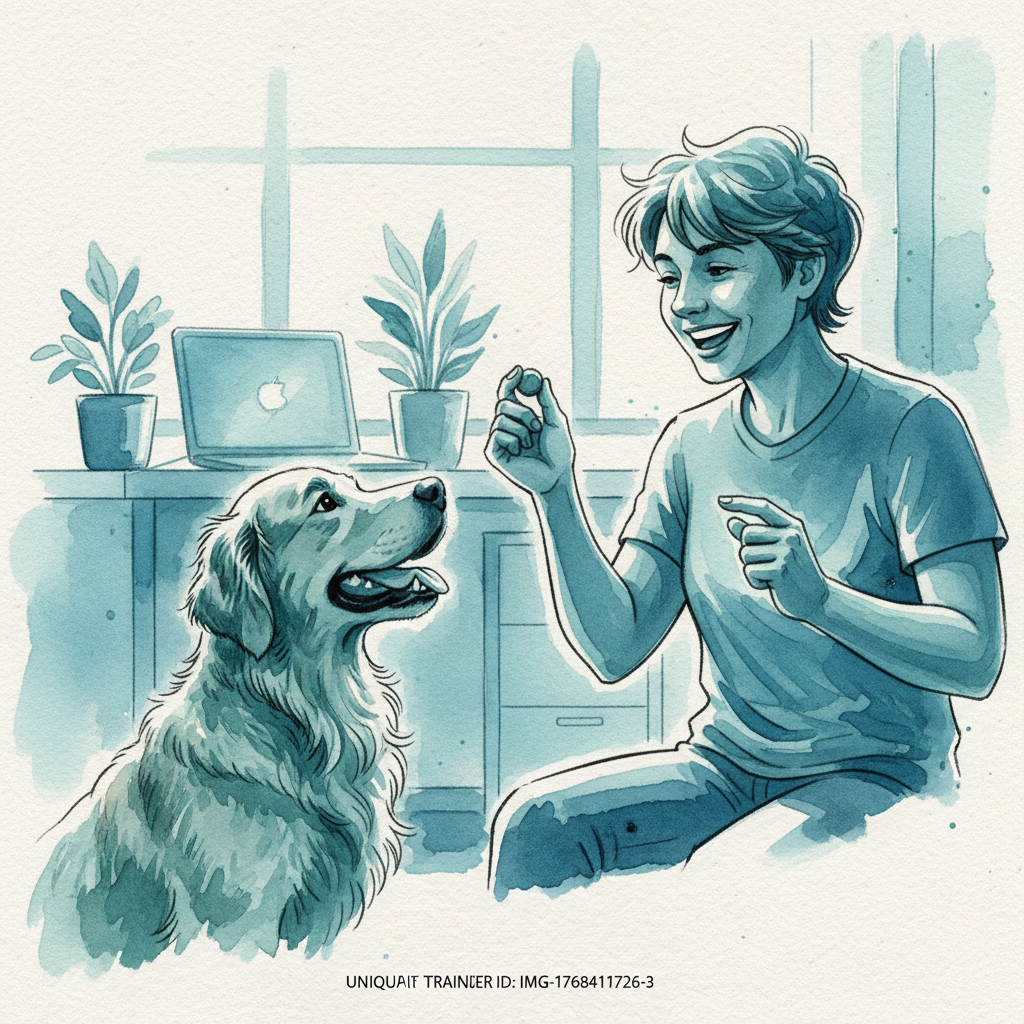
The Long-Term Benefits of Connection-Based Training
While obedience-based training may offer quick results, connection-based training provides long-term benefits that extend far beyond simple compliance. By building a strong foundation of trust, communication, and mutual respect, you can create a relationship with your dog that is based on genuine understanding and affection.
A dog that is trained through connection is more likely to be well-adjusted, confident, and resilient. It will be better able to handle stress and adapt to new situations. It will also be more likely to exhibit good behavior in a variety of environments, even in the absence of direct supervision. This is because it has learned to internalize the values and expectations of its owner, rather than simply relying on external cues and commands.
Furthermore, connection-based training strengthens the bond between dog and owner, creating a relationship that is based on mutual love and respect. This leads to a more fulfilling and enjoyable life for both dog and owner. You’ll find your dog is more eager to please, more responsive to your cues, and more willing to cooperate. The deep connection transcends simple commands; it becomes a partnership.
Beyond the Basics: Lifelong Learning
Connection-based training isn’t just about teaching basic commands. It’s about fostering a lifelong love of learning in both dog and owner. It encourages you to continue exploring new activities and challenges together, strengthening your bond and expanding your dog’s horizons.
Consider trying agility training, trick training, or even scent work. These activities provide mental stimulation, physical exercise, and opportunities for teamwork. They also allow you to continue building on the foundation of trust and communication that you’ve established through connection-based training.
The journey of connection-based training is an ongoing process of learning, growth, and discovery. It requires patience, dedication, and a willingness to see the world from your dog’s point of view. But the rewards are immeasurable. You’ll not only have a well-behaved dog, but you’ll also have a loyal companion, a trusted friend, and a source of unconditional love.

Re-evaluating Our Approach to Training
Ultimately, the question we need to ask ourselves is: what do we truly want from our relationship with our dogs? Do we want a perfectly obedient robot that performs on command, or do we want a genuine connection based on trust, understanding, and mutual respect? The answer, for most of us, is undoubtedly the latter.
It’s time to re-evaluate our approach to dog training and move beyond the outdated paradigm of obedience-based methods. Let’s embrace connection-based training, not just as a technique, but as a philosophy. Let’s strive to understand our dogs, to communicate with them effectively, and to build relationships that are based on love, compassion, and mutual respect. By doing so, we can unlock the full potential of our canine companions and create a more harmonious and fulfilling life together.
The path to a truly well-behaved dog isn’t paved with commands and corrections, but with connection and understanding. It’s a journey worth taking, for both you and your furry friend. It requires patience, empathy, and a willingness to learn. But the rewards – a stronger bond, a more confident dog, and a more fulfilling relationship – are well worth the effort. So, take a deep breath, open your heart, and embark on the journey of connection-based training. You won’t regret it.

Hi, my name is Robert Max, I live in the United States and I’m the creator of InTechNews. I started this blog with the goal of sharing reliable and practical information about pet care, helping pet owners provide a healthier and happier life for their animals. I’m passionate about animal well-being and believe that good information makes all the difference in responsible pet ownership.